STORY
Freud and the Eel
Written by Yasemin Ozer
29/11/2025
“The unconscious is the true psychical reality; in its innermost nature it is as much unknown to us as the reality of the external world.”
Sigmund Freud
(1915, The Unconscious)
Freud and Eels. Who Would Have Thought?
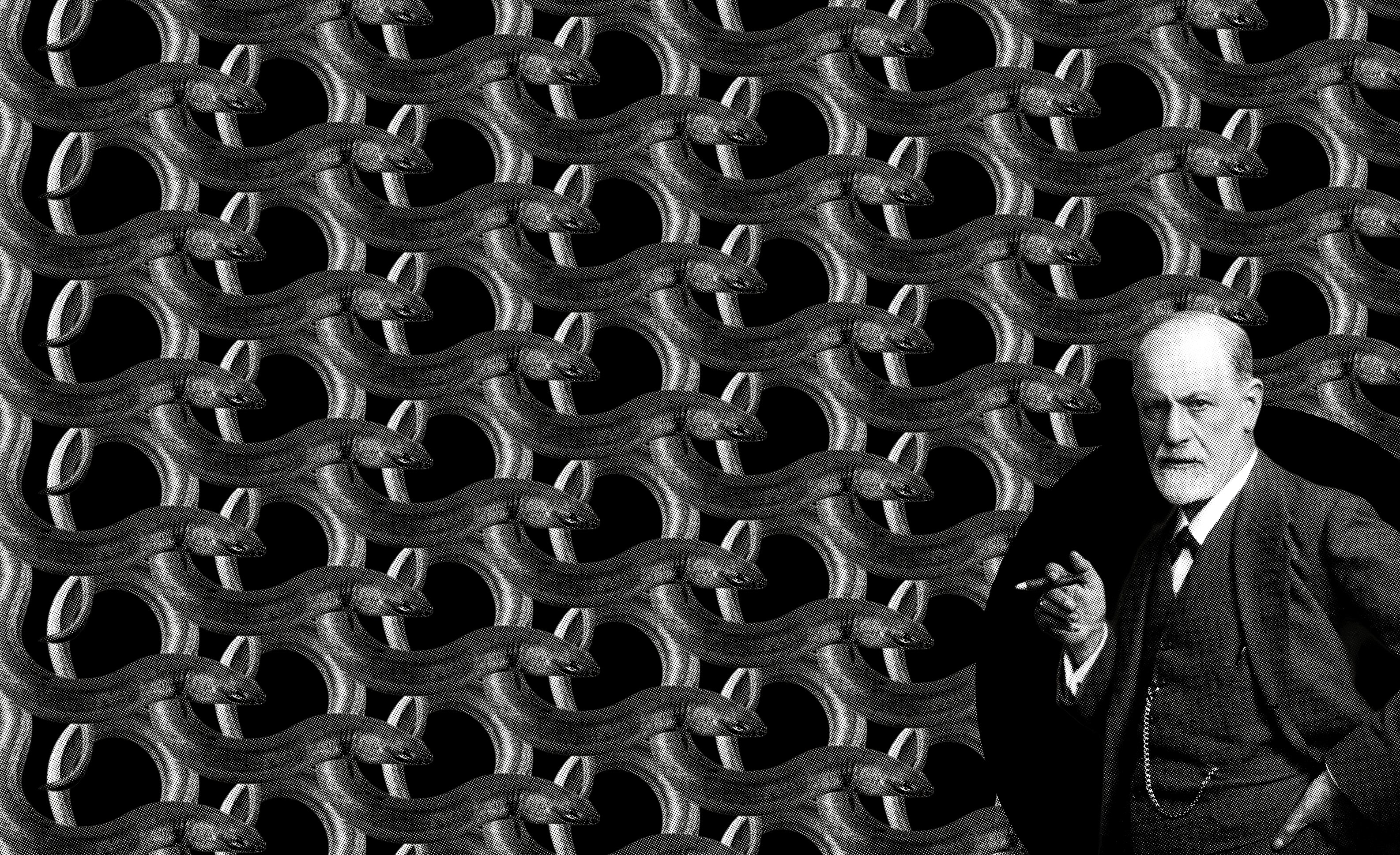
In 1876, young Sigmund Freud stood over a table full of dead eels. He was twenty years old, working in a lab in Trieste under his Darwinist professor, Carl Claus. His task was simple but strangely impossible: finding the male sex organs of the eel.
At the time, no one had ever seen an eel reproduce. Their testes remained hidden deep under their serpentine skin, undetectable, unfathomable until the final phase of their life—a phase that occurred thousands of kilometers away from where he stood in eel blood and frustration, in the Sargasso Sea, where European eels travel once in their lifetime to spawn and then die. But at the time no one had a single idea.
Freud spent long, wet weeks dissecting over 400 specimens. Day after day, he sliced into their cold, lifeless bodies, searching for testicles that seemed never to exist. Aristotle himself had failed at this same task two millennia earlier, insisting instead that eels must be born spontaneously from mud. By the end of his stay, Freud too had found nothing.
It would take nearly twenty years before a male eel was finally found off the coast of Sicily.
A New Obsession Is Born
Ernest Jones —his friend and biographer—suggested that the eel episode planted seeds of the anxiety that would later define the foundation of his psychoanalytic thought. The battle was lost, but a new obsession was born. And ell was at the centre of mind. A mind that would soon become obsessed and contaminated with the unconscious, with buried desires and drives.
You See Me
In the pursuit of finding the buried sex, he was first confronted with a literal body that would not reveal itself.
A body its sexuality is deeply unseen, delayed, resistant, even sly just like how he would later define ours.
Later scholars—psychoanalysts, surrealists—have progressed the metaphor. The eel was indeed the perfect symbol of the unconscious. It checked the boxes. Slippery, ambiguous, serpentine. Never where you think it would be.
Moving like desire between the dark currents and hiding like desire behind the rocks & reefs when looked at too directly hiding from clarity, visibility, or logic.
You can’t see it, but it can see you.
First Patient
Freud would go on to uncover other invisible worlds under our skin: repression, the Oedipus complex, hysteria, the death drive. But maybe it all started with the eel — with its resistance to the cut, to being opened, to being known.
It was his first patient, in a way, and a tough one. What he found in that body, and perhaps in himself, may have been the beginning of a lifelong obsession: not with sex itself, but with what sex hides.