PHOTOGRAPHY
by Joe Charrington
Ashpalt Kingdom
Written by Yasemin Ozer
14/03/2025
Within the ancient boundary lines of Sussex, a delicate tension exists—between what nature reclaims and what humanity builds in devotion.
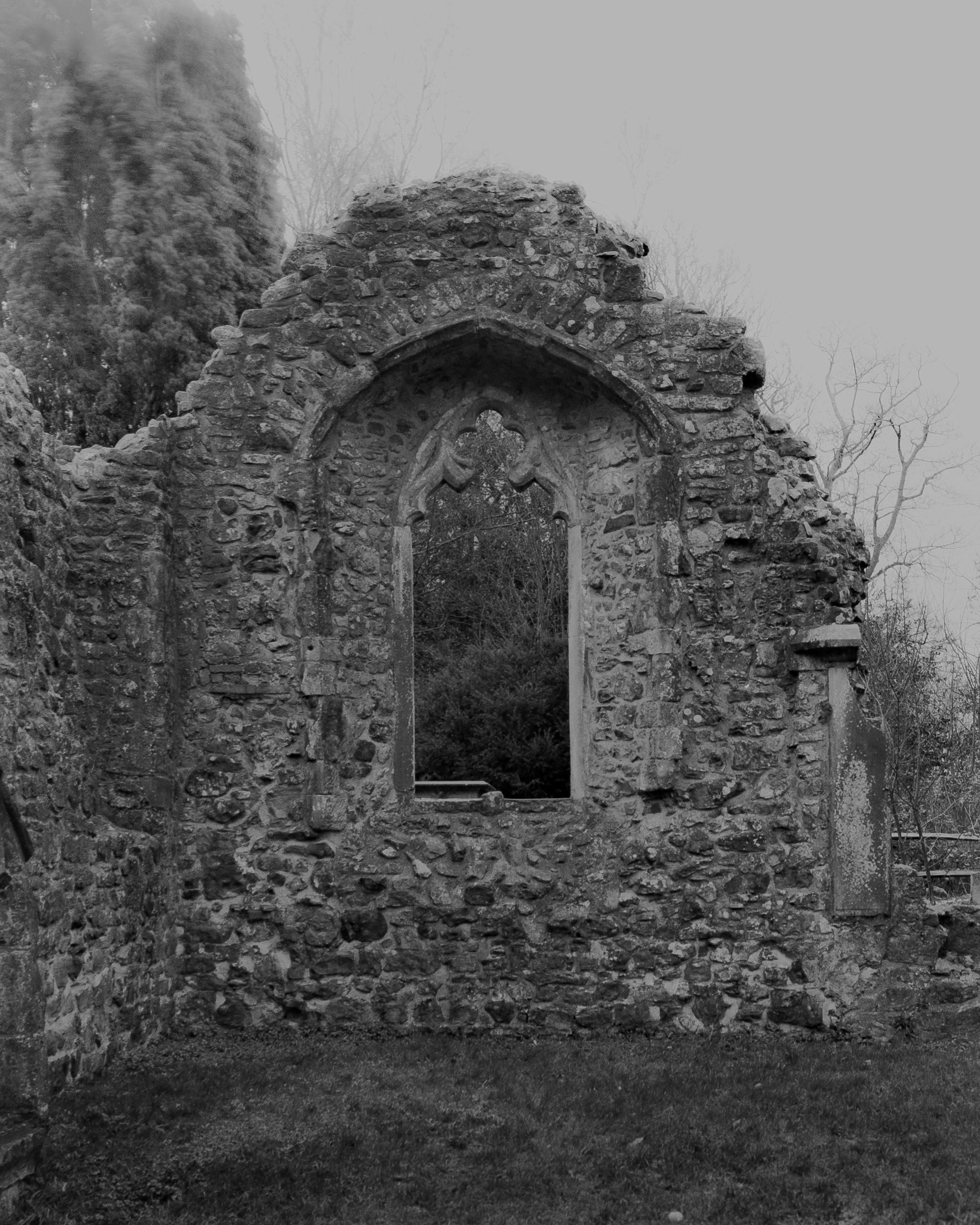
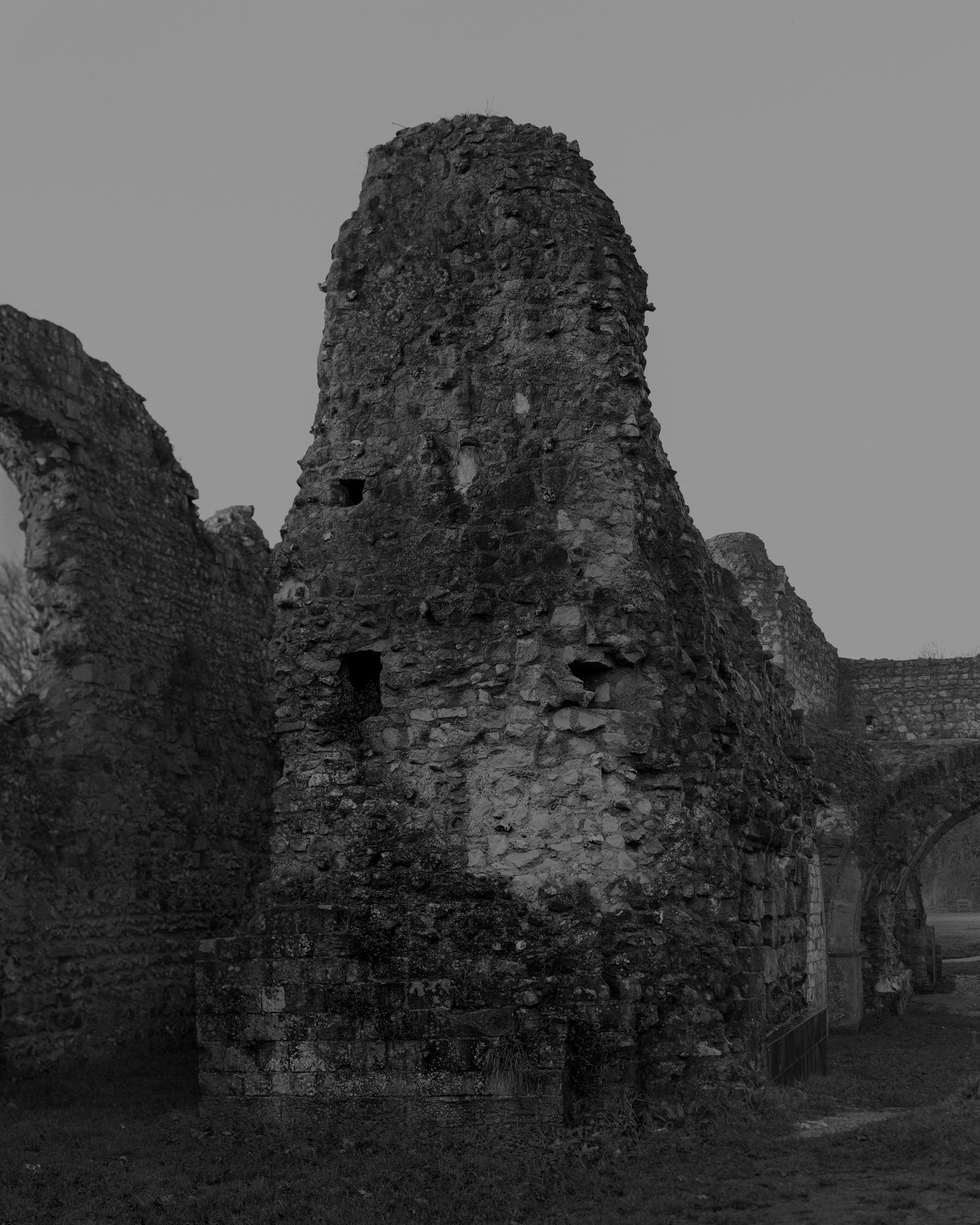
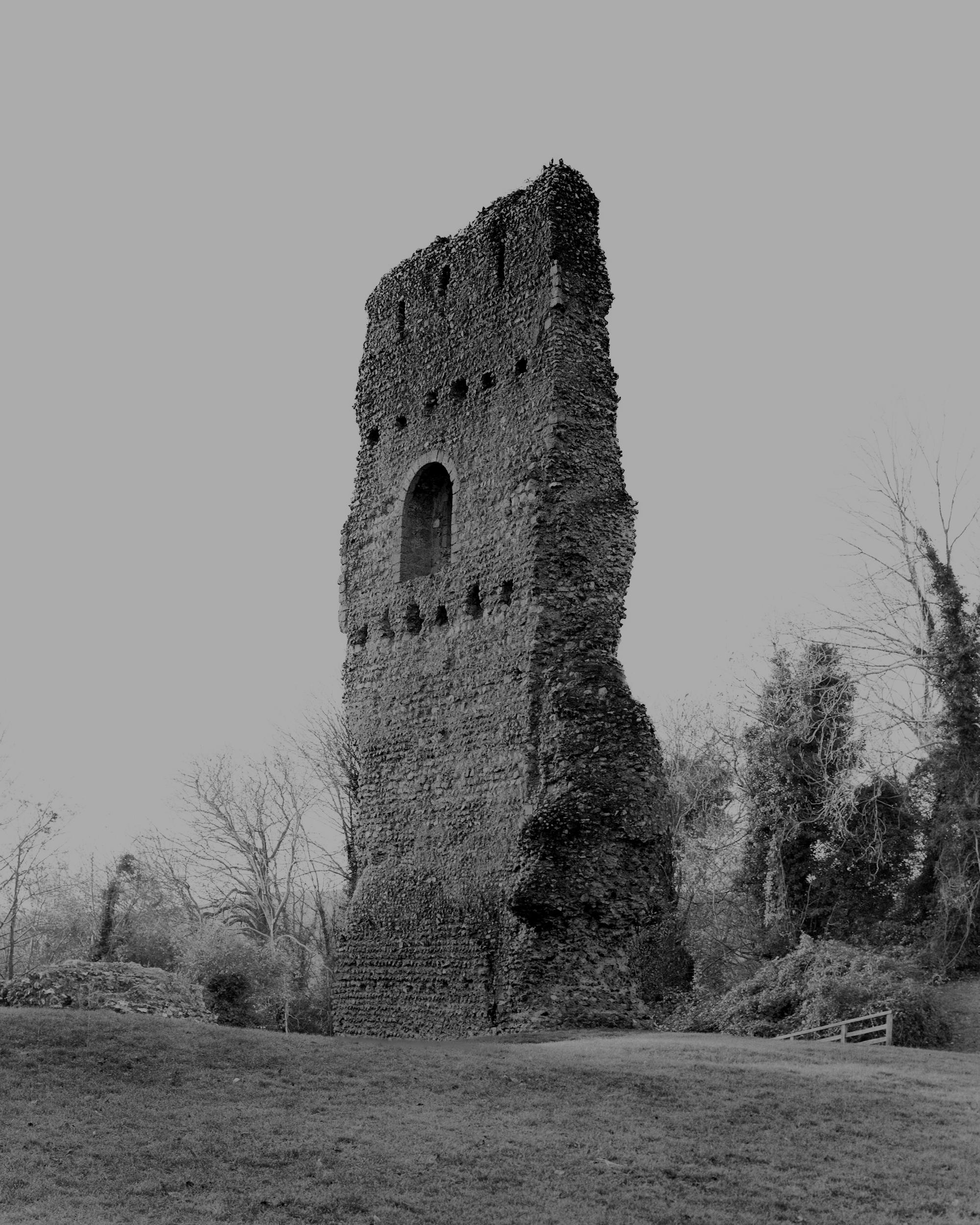
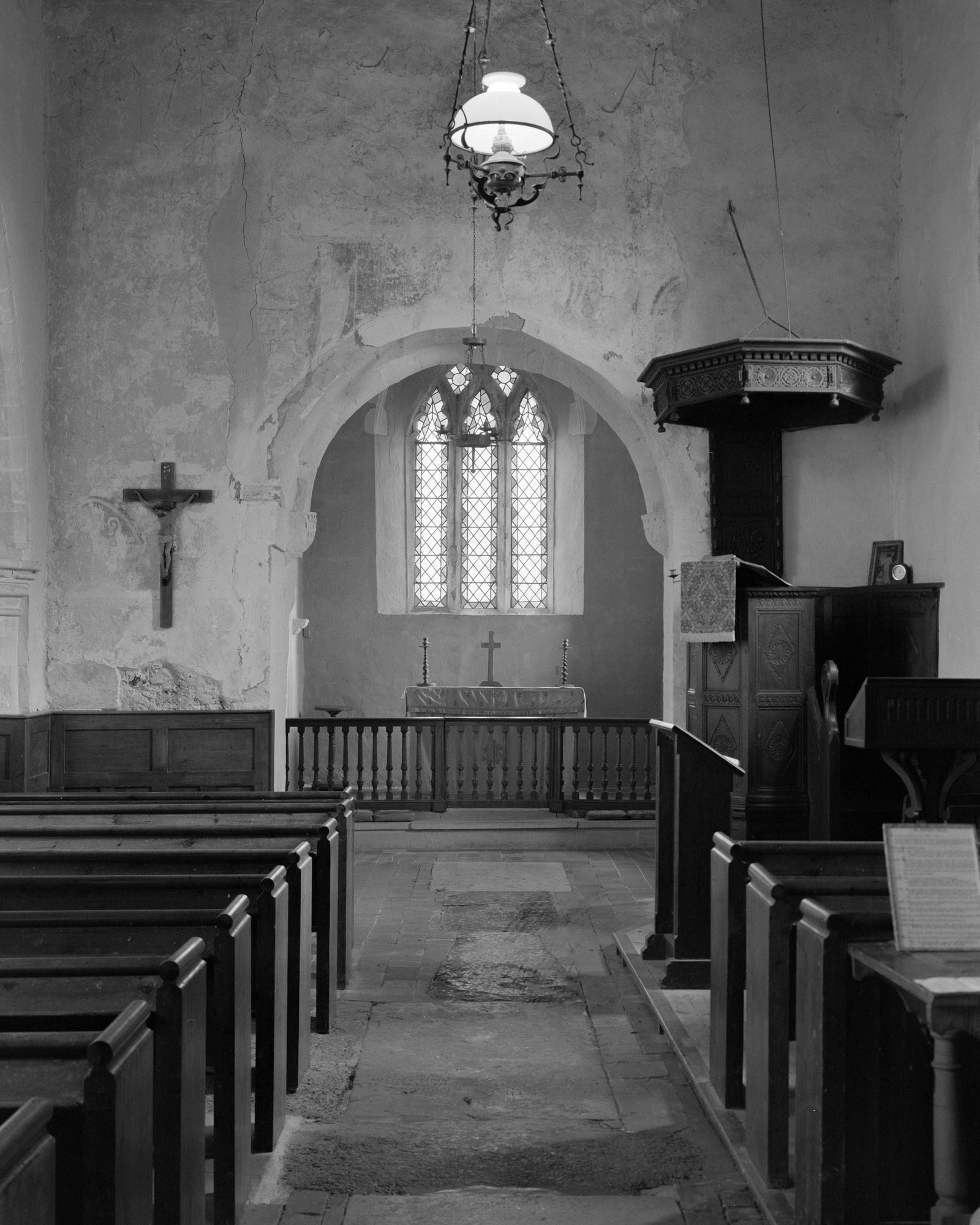
In Asphalt Kingdom, photographer Joe Charrington captures this dynamic, describing it as “a meeting point in which both seem to exist at once.” His images document ruinous monoliths that stand as silent witnesses to both ecological transformation and theological endurance—a visual meditation on time, faith, and landscape.
Since Sussex’s Christianisation in 680 AD, faith has left an undeniable imprint on the land. Over 560 Anglican churches, alongside countless Catholic places of worship, remain anchored. Yet, just as faith shaped the land, the land shaped faith. Some churches stand firm, while others crumble, dissolving into the very landscape they once defined.
Charrington’s work highlights these ruins not merely as symbols of architectural decay but as markers of a shifting relationship between humans, faith, and the natural world. The stones that once formed altars, bell towers, and sacred halls are now entwined with ivy, sheltering wildlife, or simply sinking into the soil. It highlights how no structure, no ideology, no empire is immune to nature’s reclamation.
The presence of these ruins near places of worship raises profound questions about the role of faith in ecological responsibility. For centuries, theology has shaped humanity’s understanding of nature—as something to be conquered, feared, or revered. But today, as climate change and cultural shifts accelerate, does faith still offer guidance? Or do these ruins tell a different story—one of humility, balance, and coexistence with the land?