STORY
Taking Off
Written by Yasemin Ozer
Not So Much
We certainly love birds more when they are gliding midair, when they are brave enough to let the winds carry them away from where they took off. Not so much when they are grounded by their wings, and when they are after our fish and chips. Not so much when they are still trying and failing to fly.
But what does it mean to take off? How do they get there, and what can they teach us about taking off?
Physics, Muscles, Risks
We admire a soaring eagle, but do we admire the moment it had to endure a second before taking off—the hesitation, the push against gravity, the wings fighting to lift something that was, just a second ago, tied to the earth?
What about the physics, the muscles, the risks? Do we admire them too?
Or are we just after the sight?
Rush & Push
Imagine the “before” of that one moment. The FOMO that hits—of leaving your home behind—the safety of the known whispering to you "stay”, the deep breaths, and the heart pounding into the chest.
And then a rush & push to live.
Freely and fully.
Can’t Stay Here Forever
Taking off is just one moment, but staying in the air, that takes real work—“making it work.” Because the wind does not carry you forever, and gravity never stops pulling you down—like people. The forces of nature pull you apart, as you just wish for nothing but to go home—wherever that is anymore.
But even when home is a question mark, many bird species have a tendency to find it. Even the ones that seem built for the sky stay up there forever. Because the sky is open, full of endless opportunities. But it is not home.
Heart to Heart
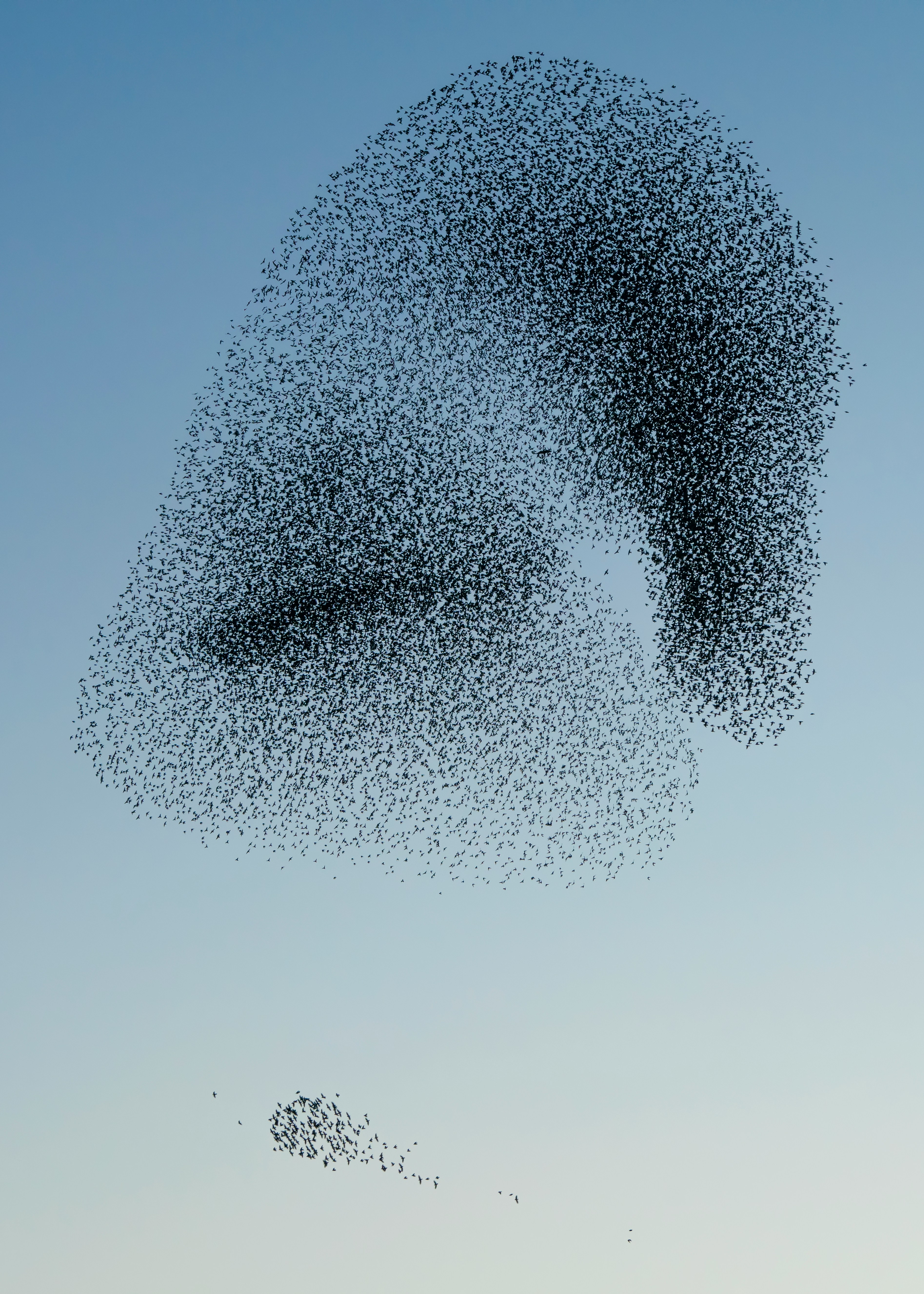
Birds don’t go through all that alone; they need company like we do. When the nights are long, the air is too cold, and the winds are too harsh, they find each other. The stirling moving as one giant body, thinking, calibrating and feeling together. Albatrosses, wandering around but always circling back to their love of life waiting on the same lonely rock. Or the wild geese leading the V-formation, flying high up in the sky, breaking the wind so others can save their strength and soften their hearts. They do not leave each other behind.
I Wish It Was Me
So when you see a wild geese, high up in the beautiful blue sky, see the courage of its flight–for once it was a child with shaking knees and a flightless heart.
Try to see the failures before you see the accomplishments, and remember before you say “I wish I was up there”--so did they once.