STORY
Two Pods, Two Worlds
Written by Yasemin Ozer
29/11/2025
“What is the use of a voice if it cannot be heard? What is the use of a language if no one speaks it?”
Ursula K. Le Guin, “The Telling”
Culture. Culture. Culture.
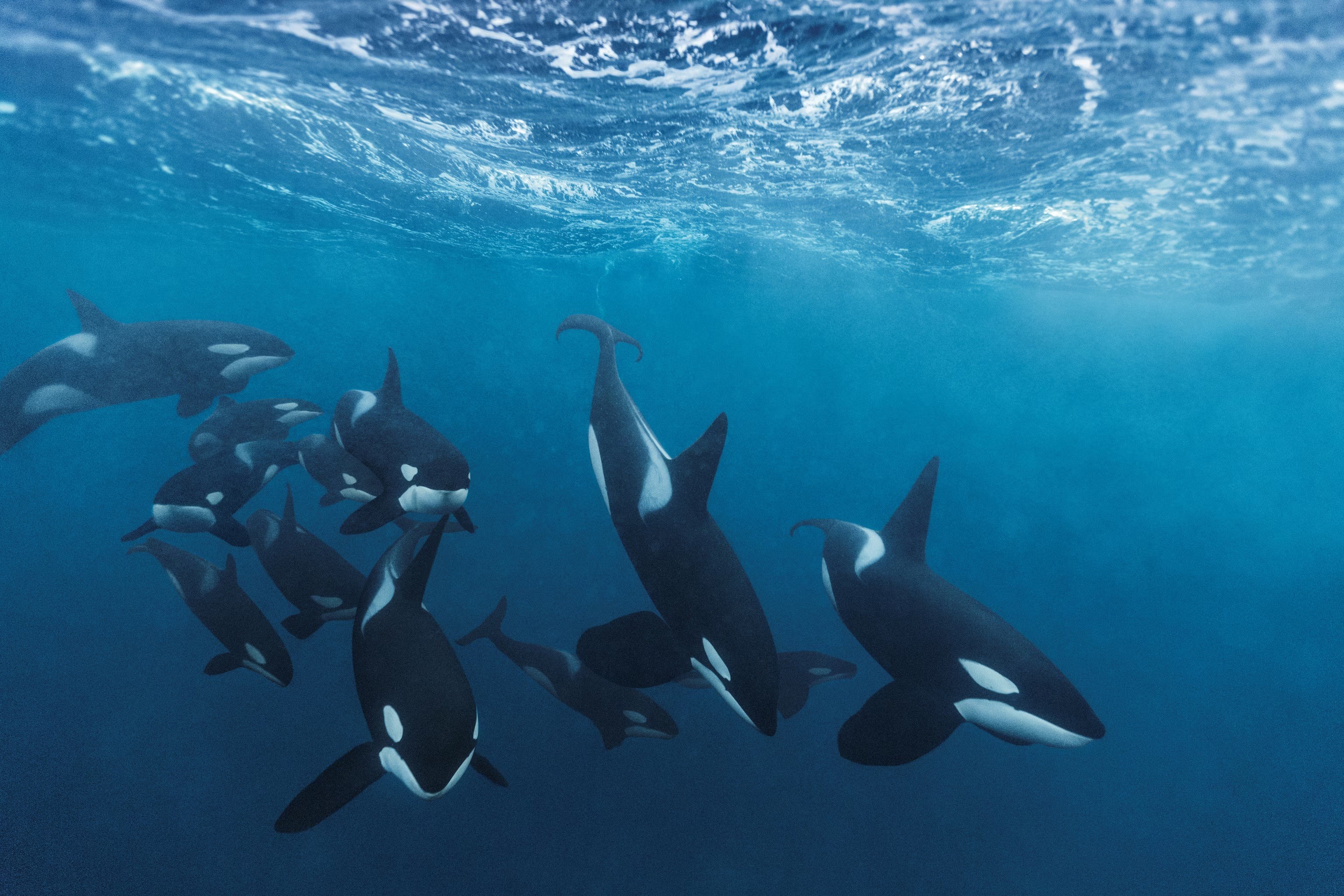
In every ocean on Earth—from polar ice shelves to tropical reefs—lives one of the most intelligent, widespread, and misunderstood species on the planet: the orca. Known by many names—killer whale, blackfish, Orcinus orca from the name Orcus, god of the underworld and champion of death. These animals have long fascinated us for their power. But if we look a little further than their bite force or hunting speed, we see their most remarkable trait: They live in cultures.
Good Old Talking
Each orca pod has its own dialect: unique combinations of calls, whistles, and clicks passed down not through fancy DNA strains but through generations of good old talking. Scientists first noticed this in the 1970s when researchers like John Ford began recording vocalizations in the Pacific Northwest. What they found was astonishing—pods living in the same region had entirely distinct vocal repertoires. These dialects remained stable over decades, passed only from mother to calf like oral traditions. This meant that two pods were two worlds.
Bound By Sound
And the more we listened, the more we realized we were not just getting a glimpse into their big wet world, but their identities. What scientists began to understand was that these vocal patterns weren’t just “practical” in their survival or echolocation; they were social blueprints that bound individuals together. To belong to a pod meant mastering the dialect, not just mimicking sounds, but learning when and how to use them.
Forever & Always
And if you didn’t speak the dialect? You didn’t belong. Not in a cruel way but in the quiet and invisible way that all cultures draw their lines here and there. Through their calls, orcas weren’t just mapping their wild wet world. They were mapping each other’s hearts and eyes who is behind that plankton-covered skin, who is a stranger (forever), and who is home (always). Because trust is scarce on land but even scarcer underwater, when they find it, they don’t let it sink.
Trust The Process?
Along the coast of Argentina, a particular group of orcas has learned to trust the hunt and come up with the most sophisticated hunting techniques ever seen in the animal kingdom: intentional stranding.
During high tide, these orcas launch themselves onto shore to snatch sea lions from the surf, then hope to wriggle back into the ocean. One miscalculation, and it’s suicide.
Be Careful, Knowledge Spreads
Young whales spend years rehearsing with seaweed, with waves, with nothing at all, just their breath and their fear. Some never try again. Some never make it back. But a few do. Only 13 of them.
And when they do, they carry more than just a prey in their jaws. They carry the most vital sustenance of all: knowledge—alive, dangerous, and deeply contagious.