STORY
Womb and Tomb
Written by Yasemin Ozer
29/11/2025
“Mothers have martyred themselves in their children’s names since the beginning of time. We have lived as if she who disappears the most, loves the most.”
Glennon Doyle
Is This It?
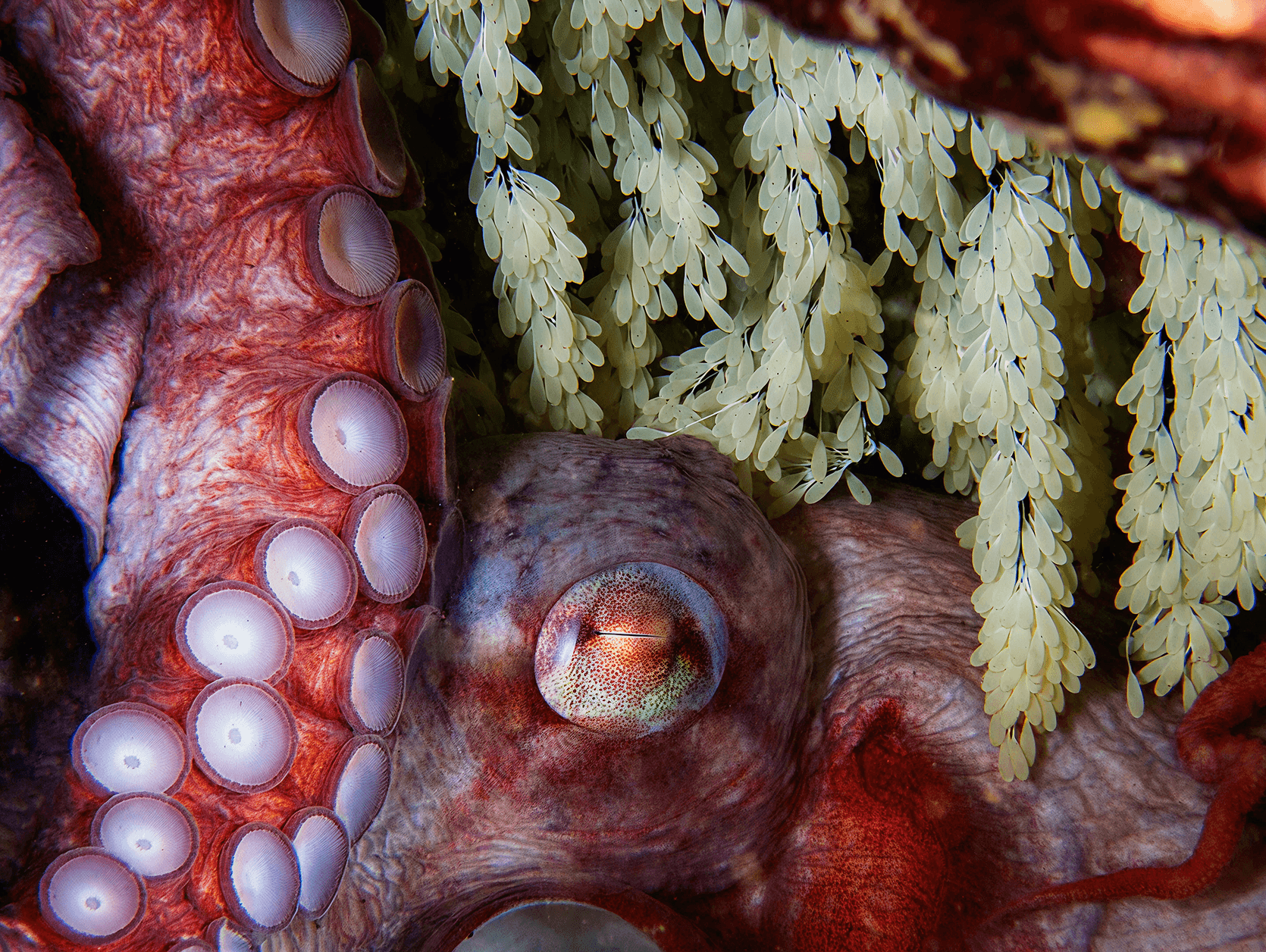
The giant Pacific octopus sends out a pheromone to attract males through the dark, cold water, and when a male answers, they have this embrace that goes on for hours. They get tangled in limbs and trust, three hearts over three hearts, eight arms over eight arms, stroking, studying, and remembering each other. And then when she finds herself a den for what’s next, he disappears; she never sees him again.
Nothing Can Hurt You Here
With her three broken hearts she barricades herself into this prison, sealing the entrance with stones, shell fragments, or anything she can find. She is not trapped, but she is choosing: To give all she has to silver lives she’ll never live to see. To protect them, she spends months just nurturing. She can't feed herself or move; she just has to devote all her energy to keeping them clean, covering them and blowing oxygenated water on them.
There Must Be Another Way
Then eventually they hatch. It's almost her last breath, and she uses it to blow more water, making it easier for them to leave her and drift. It is, undeniably, a Shakespearean tragedy: of devotion total and irreversible. Of love so vast it obliterates the self. She gives everything, and that costs her everything. And in that silence we’re left to wonder:
Does it have to be this way?
And yes, the octopus has to live that truth to its extreme because its biology demands it and has no other choice. Though we are not cephalopods, we know this shape: the mother who gives until there is nothing left. Who forgets how to say “I need” or “I want” and who sets herself aside not once, but all the time. We romanticize it. We call it love. We write poetry and tributes about selfless mothers, as if the most beautiful thing a woman can do is to disappear for her kids.
We Stay
The octopus dies because she must. But we, with our language and our laws, our networks of care, and our freedom to choose differently, we do have a choice. We don’t have to bury ourselves to raise something else up. Quite the opposite.
Love doesn’t have to mean extinction.